
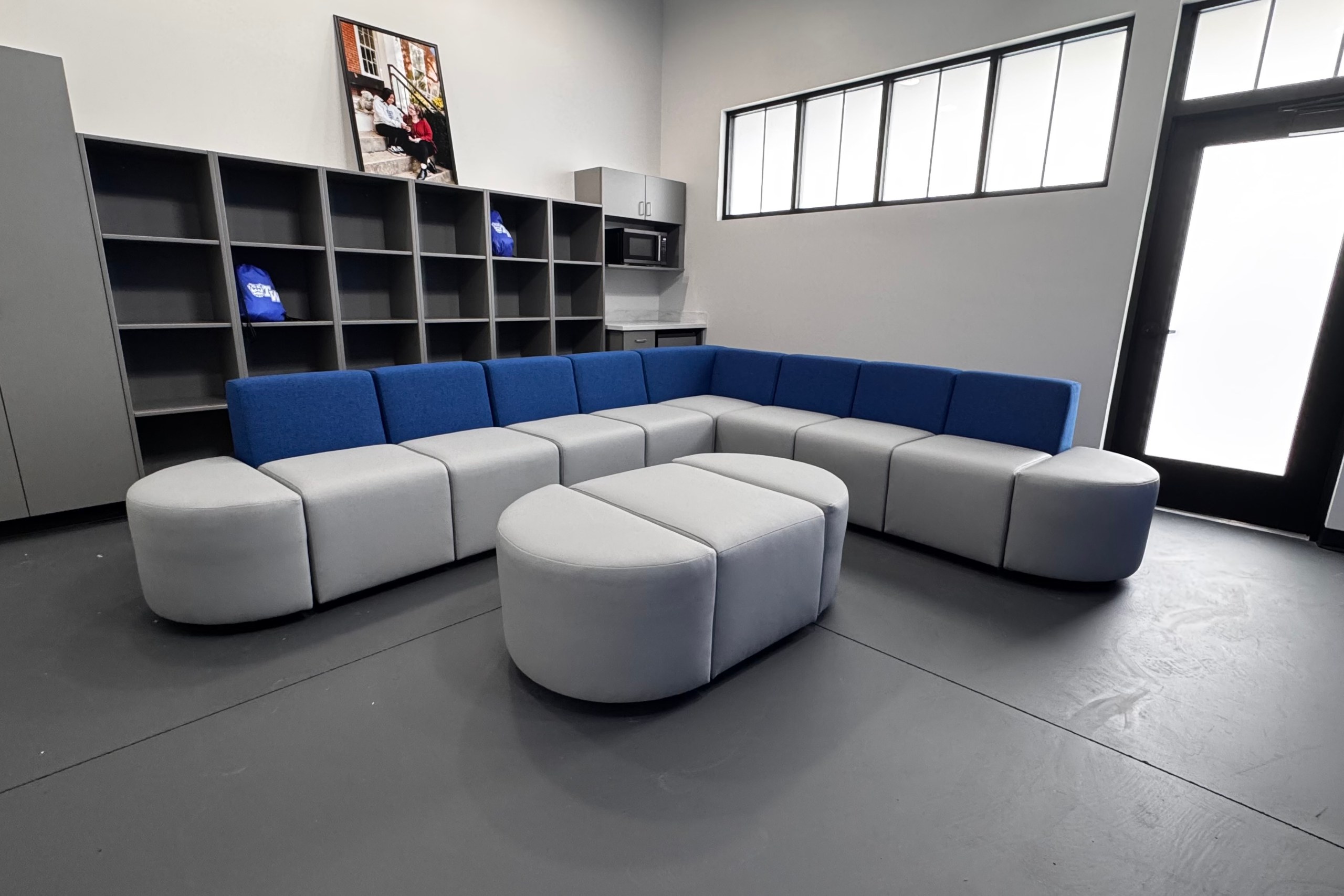
Specifying Lounge & Common Area Furniture for Residence Halls
Key Takeaways:
- A shared lounge takes more daily use than any bedroom, so it needs its own requirements, written separately from the in-room furniture in a residence hall spec.
- Replaceable upholstery lets a lounge sofa get a new cover when the fabric wears out, so the frame stays in service.
- Lounge frames take the most stress at the joints every time a piece is dragged or lifted, so the spec should ask bidders how those joints are built.
- Ask bidders to state warranty terms for case goods and upholstery separately, including whether fabrics can be replaced under warranty.
- Planning for quantities and spares means a damaged chair can be swapped right away, without leaving a gap residents notice.
In a residence hall, the lounge is the one room that belongs to everyone, and residents use it at every hour of the day and night. A bedroom chair serves one student for a year, while a lounge sofa might serve dozens of them in a single week.
That difference is why student lounge furniture needs its own section in your furniture spec, the written set of requirements every bidder prices against. Below, we walk through what that section should cover, from how the room gets used to soft seating, tables, warranty terms, and spares.
How Lounge Use Shapes a Residence Hall Furniture Spec
Wear on a bed or desk shows up at move-out, when staff inspect each resident’s room. Lounge furniture never goes through that check, so damage often goes unnoticed until something breaks. The lounge section of a spec has to account for that wear before staff ever see it.
How is lounge furniture used differently from in-room furniture?
Lounge furniture gets far more users per piece than in-room furniture, and residents move it constantly, pulling chairs into a study group or dragging a sofa closer to the TV. Each of those habits puts a different kind of strain on the furniture.
A lounge spec should plan for:
- More seat time per cushion than any bedroom chair will see
- Frequent dragging and lifting, which stresses joints and legs
- Food, drinks, and late nights, which test every fabric and finish in the room
The requirements below assume your floor plan is already set. For help deciding where seating groups go, see our posts on how furniture shapes community-centered spaces and seating and space planning for student lounges.
What do residents need from a study lounge?
Residents need a study lounge where they can work on their own while staying near other people. The design firm The Lawrence Group calls this kind of setup “alone together” space in its look at housing for Gen Z students.
Turning that idea into written requirements usually means asking for:
- Individual seats with a work surface big enough for a laptop and notes
- Power within reach of each seat
- Seating light enough to pull into a group without scratching the floor or straining the frame
Soft Seating Requirements for Residence Hall Lounges
Soft seating (sofas, lounge chairs, and other upholstered pieces) is where wear shows up first in a lounge. That makes it the part of the spec where precise requirements matter most.
What upholstery performance should a lounge spec call for?
A lounge spec should call for commercial-grade upholstery with documented test results in three areas:
- Abrasion resistance: how well the fabric holds up to rubbing, reported as a rating from a standardized rub test
- Cleanability: a cleaning code that tells housekeeping which cleaners the fabric can safely take
- Flammability: testing to whatever standard your campus fire marshal requires
When every bidder includes that documentation, your committee can compare fabrics on their published ratings instead of on how a swatch looks and feels.
Why does replaceable upholstery matter in a lounge?
Replaceable upholstery matters in a lounge because the fabric usually wears out long before the frame does. We build with removable, replaceable upholstery, so a stained or torn seat gets a new cover and the rest of the piece stays in use, which keeps replacement costs and landfill waste down.
Replacement covers are only easy to order if the fabric list stays manageable. Peyton Long, Senior Project Manager for On Campus projects at Smarter Furnishings, recommends planning lounge fabrics across the whole campus rather than room by room:
“The advice I give housing teams is to keep the lounge fabric list short. When every common area on campus uses the same one or two fabrics, a replacement cover is easy to order. A recovered sofa still matches the chairs around it, even after years of repairs.”
How should lounge frames be built to handle constant moving?
A lounge frame holds up to constant moving when its load-bearing joints are built for it: the points where legs meet rails and arms meet the seat. Those joints take the force every time a sofa is dragged across the floor or lifted by one end.
For lounge seating, ask every bidder to state how frames are built and joined at those points. Our residence hall spec guide covers case goods construction in full, and our post on contract-grade construction explains what separates furniture built for commercial use from residential pieces.
Coffee Tables, Media Units, & Other Common Area Case Goods
Case goods are the hard, non-upholstered pieces in a room, such as tables, media units, and storage. In a lounge, most of their wear lands on tops and edges, where residents rest their feet and push chairs in.
The construction standards you’d write for in-room case goods carry straight over to the lounge, with added attention to those surfaces. Tops and edges that resist chips and scratches mean fewer repair calls and fewer pieces out of service, which keeps long-term maintenance costs down.
Writing common areas into the same package as the rooms means lounge and bedroom furniture get held to the same construction and finish requirements. Our work for the University of Chicago covered more than 1,200 student living units, including common-area furniture in select buildings. You can see more of the residence halls we’ve furnished on our on-campus housing page.
Warranty Terms for Residence Hall Lounge Furniture
A lounge holds more soft seating than most rooms on campus, so warranty terms carry extra weight here.
How does warranty coverage differ between case goods and upholstery?
Case goods and upholstery are covered under separate warranty terms, so a lounge spec should ask every bidder to state both. Our 25-year case goods warranty covers the tables, media units, and storage in the room.
For certain upholstery pieces, we can also remove and replace fabrics within our warranty. That matters most in a lounge, where cushions take the heaviest wear.
Quantities & Spares for Lounge Furniture
The last part of the lounge section covers how many pieces to order, including whether to hold some in reserve.
Should you order spare lounge pieces?
Ordering a few spare lounge pieces or replacement covers makes sense for a busy common area. When a chair gets damaged, staff can swap in a spare the same day, so the room stays fully furnished while a repair or reorder is underway.
We recommend 20 or more units of each product for the best pricing and logistics. Standardizing lounge seating across several buildings makes that number easier to reach on the main order, and it makes spares easier to price alongside it.
Smarter Common Spaces Start Here
A lounge section that covers upholstery, frames, surfaces, warranty terms, and spares gives every bidder the same requirements to price against, so your committee can compare bids on equal terms. Whether you’re a housing director, a facilities manager, or a designer drafting specs for your next residence hall bid, we can help you write lounge requirements every bidder can be held to.
Ready to chat about a project? Reach out to start the conversation with Smarter Furnishings.
For more insights, planning tips, and real-world project examples, explore the Smarter Furnishings blog.