

How to Protect Your Move-In Date & Furniture Installation Timeline
Key Takeaways:
- Move-in day is the one date outside forces have already set, and it holds no matter what happens ahead of it.
- Everywhere else in the schedule, a few lost days here and there add up, and that time comes out of install because install is the last step before move-in.
- Production runs 12 to 16 weeks for a product being built for the first time, and that clock only starts once your order is signed and your product and finish selections are confirmed.
- On larger projects, a site visit weeks or months ahead settles truck access, staging positions, and dumpster placement long before the first trailer arrives.
- Old furniture removal is an add-on worth requesting early in the project, not a decision to make on install morning.
Move-In Day is the Date Everything Else Works Around
Every furniture schedule has one date on it that won’t move. Residents signed leases around it. Somebody in a leasing or housing office has already promised a family that their student’s room will be ready, and that promise was made months before anyone picked a finish. That date is move-in day, and it holds no matter what happens ahead of it.
Everywhere else in the schedule, there’s a little room to move. An approval sits waiting on a signature. A laminate gets swapped for a stained rubberwood finish. A production slot slides by a week. Each of these can cost a few days (which might not feel like much at the time), but move-in day doesn’t shift to make room for it. Instead, installation becomes more of a “crunch.”
That’s the awkward spot furniture sits in. It’s one of the last scopes into the building, it depends on every trade ahead of it finishing on time, and it’s the first thing a resident or student actually puts their hands on. So contract furniture installation belongs on the schedule early, while the calendar still has some give in it, instead of being worked out after construction wraps.
Where the Weeks Go Before a Truck Ever Loads
Here’s the part that catches most teams off guard: an approval sitting unsigned on somebody’s desk for three weeks doesn’t push everything downstream by three weeks. It crunches the factory, and installation is often still expected to happen on the original date.
From approvals and finish selections to freight scheduling and site access, a contract furniture timeline is really a chain of dependencies, and most of the ones that break are sitting well upstream of the factory.
How long does contract furniture take to produce?
Standard production with Smarter Furnishings runs 12 to 16 weeks for a product being built for the first time, and that window covers everything from raw material sourcing through the full production run, packaging, and shipping. However, if a piece with custom features has been produced before, that timeline can vary a bit.
Those 12 to 16 weeks are the production half of the schedule. The rest of it (freight, staging, and install) moves at the speed your team and building allows, which is why our typical timeline for a custom project varies from one job to the next. (For example, a site with one shared freight dock schedules very differently from one with four, so ask your project manager how freight and staging land on yours.)
What has to be approved before production starts?
Production starts once your product and finish selections are confirmed. On custom work, that means locking those selections first and then approving a sample, which can happen in person or by photo and video.
Each of those steps exists to protect the specification. A sample review is the last moment when a proportion issue or a drawer-box detail can still be corrected before the full run is cut, which is a good argument for keeping it on the calendar even when the calendar is tight.
At Smarter Furnishings, we walk through every mockup and sample to settle revisions before anything moves into production. Of all the steps in our furniture process, that’s the one doing the quietest work to protect an end date that can’t be moved.
A note on scope while you plan the calendar: While there’s no formal minimum order quantity, we recommend 20 or more units of each product for pricing and logistics efficiency.
Site Conditions Set the Stage for Install Week
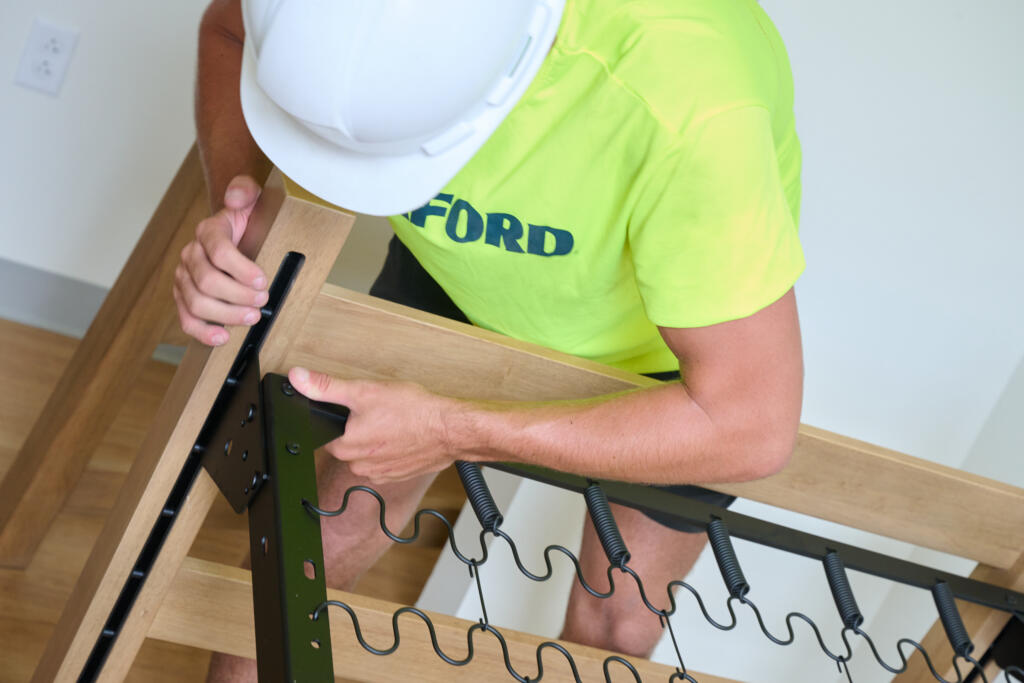
Furniture can be built, shipped, and sitting at the dock while the schedule still comes apart, because what ultimately decides the move-in date is the state of the building.
From flooring and freight dock access to elevator availability and the certificate of occupancy, the conditions waiting on site set the terms for everything a crew can do once it arrives.
What does a pre-install site visit look for?
On larger projects, your Smarter Furnishings project manager will visit the site weeks or even months ahead of install to review the site layout and building plans, identify the best truck access points, locate positions for dumpsters and staging, and assess any site restrictions or challenges.
Once site prep is complete, you’ll receive a detailed install schedule laying out what’s happening and when, built around the size and scope of your project. You’ll also meet your dedicated project manager within a few days of placing your order, and that person stays with the job all the way through the final walkthrough with your property manager or housing director.
What happens to the old furniture?
On a replacement project, clearing the old furniture out is its own dated line on the install schedule, since new case goods can’t go into rooms that still have the old beds and desks standing in them.
Upon request, our on-site install team will handle the removal and disposal of your old pieces, and when possible we coordinate donations through partners like the Chicago Furniture Bank so usable furniture stays out of landfills. The key words here are upon request, so it’s worth scoping early, while there’s still time to sequence what comes out against what goes in.
Meeting Deadlines During Turn Season
Turn season compresses the entire scope into the days between one group of residents moving out and the next moving in, often across several properties at once.
What makes turn season different from a new build?
Turn orders are mostly recurring products (i.e., refills across a portfolio) which run on a real production cycle. Our turn portal opens in late fall for existing customers to enter and review their orders, which are then consolidated, sent to corporate for approval, and released into production. So the turn you’re planning for next summer gets decided in the fall.
That process covers the bulk of a turn order. For everything it doesn’t, we stock quick-ship inventory based on past order history, so when a quantity gets overlooked or an emergency comes up mid-turn, there’s a good chance the product is already on the shelf.
What does a turn install look like in an occupied community?
Furnishing an occupied student housing community is different from furnishing an empty building. Our install teams are trained to work in residence halls, apartments, and shared education spaces, which matters most in a community that’s still running around residents, deliveries, and a leasing office in its busiest month.
Not every turn order includes an install from our side, though. Installs depend on the size of the order and the property’s budget, so it’s worth settling when the order goes into the portal rather than when trucks are being scheduled.
How to Protect the Date When Something Slips
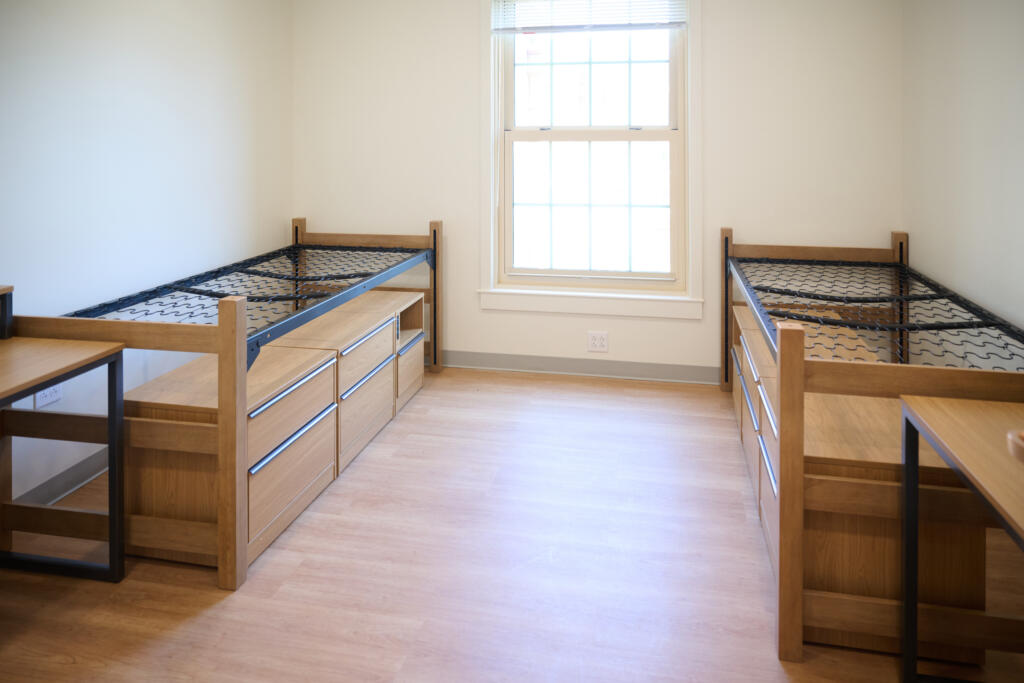
Schedules move (even solid ones). When yours does, three options are usually still on the table that can help get things back on track:
- Quick-ship products can cover part of an order without waiting on a production run.
- Value engineering, raised early and with your designer in the room, brings custom pricing down while solid wood construction and traditional joinery stay in the specification.
- And where the scope allows, a phased install lets us furnish completed areas while other work continues across the rest of the building.
All three work better in month two than in month ten, which is the practical case for raising a schedule concern the same week you first notice it.
Want a closer look at what actually happens on the ground once install week arrives? Take a look inside our install process for a step by step walkthrough.
Smarter commercial spaces start here.
Timelines to hit, buildings to fill, and people waiting to move in: that’s the reality sitting behind every install date we work toward. Bring us yours early and we’ll build the approval calendar backward from it, from product and finish selections through to freight and the final walkthrough, so your spaces work smarter from the day the doors open.
Have a project in mind? Let’s talk about your next project and how the right install plan can keep it on schedule.
For more insights like this, explore the Smarter Furnishings blog.