
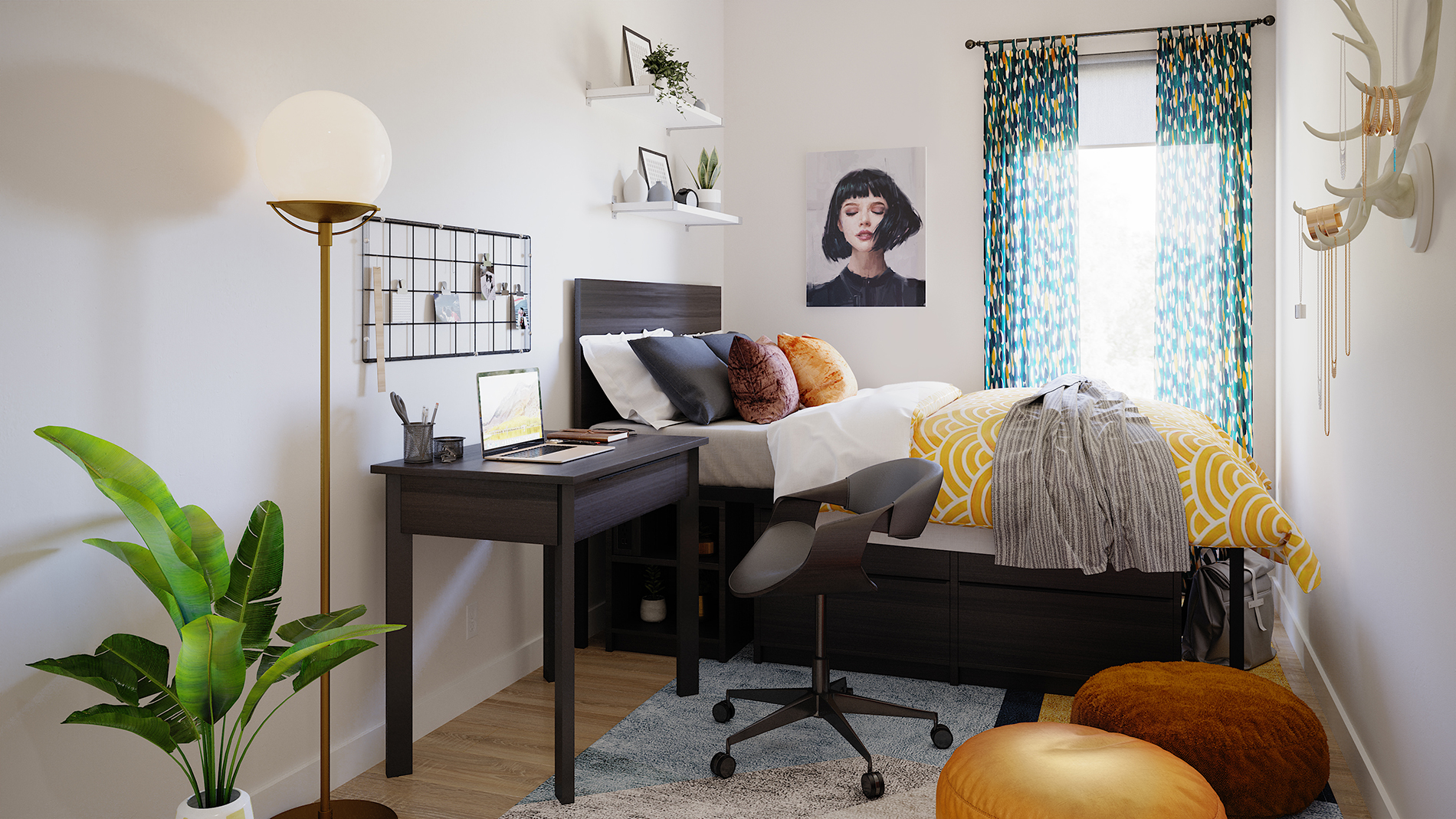
Modular, Durable Contract Furniture: 3 Tips for Student Housing
Key Takeaways: Durable Modular Contract Furniture in Student Housing
- Modular contract furniture helps both on-campus and off-campus student housing adapt to changing layouts and student expectations.
- Durable construction is essential for long-term performance in high-use student living environments.
- Custom furniture solutions allow student housing communities to align functionality, design, and operational needs.
- Smart procurement planning helps universities and developers manage furniture lifecycles more effectively.
Furniture may sit quietly in the background, but it plays a powerful role in how people experience a space.
In student housing especially, the right pieces support the everyday moments that define campus life — from late-night study sessions to shared conversations with new friends.
But as student housing continues to evolve, colleges, universities, and off-campus developers are rethinking how student-resident spaces support study, connection, comfort, and daily living.
Why Contract Furniture Matters in Student Housing Design
From collaborative lounges to multifunctional dorm rooms, today’s student living environments need furniture that works harder and lasts longer. That’s where student housing furniture designed specifically for campus life plays a critical role.
Education furniture must handle continuous use, adapt to changing layouts, and support the operational needs of campus housing teams and property managers alike.
The most effective solutions combine modular design, durable construction, and thoughtful customization. When these elements come together, student housing furniture can evolve alongside changing expectations — without requiring constant replacement or renovation.
Furniture often becomes part of the experiences people remember most about a place. In student living environments, those pieces quietly support the connections, routines, and memories that shape daily life on campus.
Tip #1 – Prioritize Modular & Flexible Furniture Design
Flexibility has become one of the most valuable qualities in modern student housing design. As universities and developers update living environments to better support student life, furniture needs to accommodate multiple uses throughout the day.
Modular contract furniture allows housing teams to adapt spaces quickly without starting from scratch. Instead of replacing entire furniture sets when layouts change, modular pieces can be reconfigured to support new needs.
Common applications of modular furniture in student housing include:
- Reconfigurable lounge seating for social spaces and study areas
- Modular sectional systems that scale to fit large or small common areas
- Movable tables and desks that support both group collaboration and individual work
- Stackable seating for multipurpose student spaces
This flexibility gives housing teams greater control over how their spaces evolve. As student expectations shift or buildings are updated, modular systems allow environments to adapt without requiring a full redesign.
What are the benefits of modular furniture solutions for student housing?
Modular furniture brings both practical and long-term advantages to on-campus and off-campus student housing environments.
Some of the most notable benefits include:
- Adaptability: Furniture layouts can shift easily as spaces transition between study, social, and community uses.
- Longevity: Pieces can be rearranged instead of replaced when space needs change.
- Space efficiency: Modular systems help maximize both large communal areas and smaller dorm room footprints.
- Operational flexibility: Housing teams can adjust layouts throughout the academic year.
For campuses and property groups managing hundreds or thousands of beds, this adaptability becomes essential. Modular furniture helps ensure that student housing environments remain functional even as needs evolve over time.
Tip #2 – Focus on Durability in Construction
Student housing furniture experiences constant activity. From move-in days to everyday use throughout the academic year, these environments place heavy demands on furniture. That’s why durability is one of the most important characteristics of contract-grade furniture.
Quality contract furniture is typically built with construction features designed for high-traffic environments. These may include reinforced structural components, commercial-grade finishes, durable laminates, and upholstery materials designed for repeated use.
Durable construction helps protect long-term furniture investments while reducing the frequency of maintenance issues for housing teams. When furniture performs reliably over time, facilities managers can focus more on supporting the student experience rather than managing repairs or replacements.
What are the key durability features in contract furniture?
Furniture designed for student housing environments often includes:
- Structural frames engineered for continuous use
- Surfaces that resist scratching, moisture, and impact
- Upholstery materials selected for durability and easy cleaning
- Hardware and joinery designed for repeated movement and maintenance
Though these construction details may not always be visible on the surface, they play an important role in how the furniture performs over time.
Tip #3 – Consider Ergonomics & End-Use in Student Housing Furniture
Furniture design also plays an important role in supporting how students actually live, study, and interact within a space.
Students spend significant time studying, relaxing, and socializing in these environments, so furniture that doesn’t account for these daily activities can quickly become uncomfortable or impractical.
Effective education furniture design considers both ergonomics and end-use scenarios. This includes factors like desk height for studying, seating support for long work sessions, and appropriately scaled furniture for shared spaces.
Thoughtful design choices may include chairs that support comfortable posture, tables that accommodate collaborative work, and lounge furniture that encourages both relaxation and social interaction.
Bring It All Together with Custom Furniture Solutions
While durability, flexibility, and ergonomics form the foundation of great student housing furniture, custom contract furniture often helps bring those elements together in a way that fits each community’s unique needs.
Every student housing property has different layouts, amenities, and design priorities. On-campus residence halls may need furniture that fits compact dorm rooms and shared lounges, while off-campus student apartments may prioritize flexible common areas or study-focused environments.
Custom furniture solutions allow universities and developers to align furniture design with the specific requirements of each project. This can include things like:
- Finishes and materials that complement the interior design of the community
- Upholstery fabrics that match branding or color palettes
- Adjusted dimensions to better fit room layouts
- Integrated storage or multifunctional furniture features
These adjustments help ensure furniture not only performs well but also contributes to a cohesive and welcoming student living environment.
What Custom & Modular Furniture Looks Like in Student Spaces
Across both universities and private student housing developments, modular and custom furniture solutions often work together to address the challenges of high-occupancy living environments. Here are a few examples of this type of furniture solution in use:
Residence hall lounges may feature modular seating that can be rearranged for group study, community gatherings, or quiet relaxation.
Dorm rooms and student apartments may incorporate custom desks, wardrobes, or storage solutions designed to maximize limited square footage.
Shared amenity spaces such as clubrooms, study lounges, and collaborative areas often rely on durable contract furniture collections that maintain a consistent look while standing up to heavy daily use.
Planning for Furniture Procurement & Long-Term Performance
Selecting furniture for student living is rarely a one-time decision. Universities and student housing developers must consider the full lifecycle of their furniture investments, from procurement and installation to long-term maintenance.
Planning ahead helps housing teams ensure furniture continues to perform effectively across multiple academic years.
Key Considerations for On-Campus Housing Projects
- Durability & construction quality for high-use residence halls
- Modular flexibility to support evolving student spaces
- Customization options that align with campus design standards
- Reliable manufacturing & delivery timelines
Key Considerations for Off-Campus Housing Projects
- Furniture solutions that balance durability with design appeal
- Efficient layouts for student apartments & shared amenities
- Consistent product availability across multi-building developments
- Long-term maintenance planning for high-occupancy properties
Working with experienced contract furniture partners can help simplify this process. From design consultation to installation planning, the right partner can help universities and developers navigate complex housing projects with greater confidence.
Ultimately, the goal isn’t just to furnish your student spaces — it’s to support the moments that happen within them for a better experience all around.
Ready to chat about a project? Reach out to start the conversation with Smarter Furnishings!
For more insights, furniture tips, and real-world project case studies, explore the Smarter Furnishings blog.