
From Line Drawing to Final Sample: How a Guest Room Casegood Gets Approved
Key Takeaways:
- Each approval on a custom hotel casegood settles one question, starting with fit and finish on paper and ending with the finished piece ready for every room.
- Line drawing and finish approval typically takes 3 to 4 weeks on our hospitality projects.
- The white-wood sample is the one chance to review how the piece is built before any finish goes on.
- A model room, when a project has one, shows the piece alongside the rest of the room, and a final sample can be approved in person or by photo and video.
- The final sample signature is what releases the full production run for the whole property.
If you’re specifying guest rooms on an owner’s behalf, the casegoods carry much of your design intent. The headboard sets the look of the room, and the nightstand gets used every night of every stay — one of the many details guests notice most.
What gets approved on those pieces goes into every room on the property, whether it’s 90 or 300 of them. Let’s follow one guest room casegood from line drawing to final sample, using a nightstand as the example. Along the way, we’ll cover what each approval checks and what your signature sets in motion.
What Each Casegood Approval is Checking
Most custom hotel casegoods move through four approvals, and each one settles a question the next step depends on. The steps vary a little from project to project, and our process overview shows where they fit:
- Line drawing & finish: Does the piece fit, function, and look the way it was designed?
- White-wood sample: Is it built the way the drawing says?
- Model room, when there is one: Does it work in the room alongside everything else?
- Final sample: Is the finished piece ready to be made for every room?
What is a casegood?
A casegood is any piece of furniture built mainly from hard materials like wood, veneer, or laminate rather than upholstery. In a hotel guest room, that usually means headboards, nightstands, desks, dressers, luggage racks, and media units. Our hospitality furniture buying guide covers those pieces category by category.
Line Drawings & Finish Samples
The first approval covers two things: a drawing that defines the piece and finish samples that show how it will look.
What does a line drawing show?
A line drawing shows a single piece in full, dimensioned detail: its overall size, materials, joinery, hardware, and finishes (some firms call these “shop drawings”). It’s where you confirm that the nightstand fits between the bed and the wall. It’s also where you check that the drawer sits at a comfortable reach from the bed.
Construction details get settled in the drawing too, since it’s what the factory builds from. On the 160+ rooms we furnished at Compass by Margaritaville in Pigeon Forge, the nightstands use a routed insert (a second material set into a channel cut into the top). The insert leaves no seams where debris could collect.
At the drawing stage, our part is turning your design into something the factory can build while keeping the details that make it yours. It’s the same approach behind how we work with architects and designers.
Why do finish samples go through more than one round?
Finish samples often take more than one round because wood, stain, and veneer look different in a physical sample than they do on a rendering. Small shifts in tone are much easier to correct at the sample stage than once production is underway.
Compass went through multiple rounds of line drawings and finish samples, including a custom-engineered teak veneer for the headboard with the knots removed so every room would have the same consistent look.
How long does line drawing and finish approval take?
Line drawing and finish approval runs 3 to 4 weeks on a custom hotel casegood. Each extra pass on a drawing or finish sample pushes a piece toward the longer end. Gathering comments from the owner and the purchasing team before you send each round back to us helps keep those extra passes to a minimum.
The White-Wood Sample
Once drawings and finishes are approved and the sales order is signed, production begins, and one of its first milestones is the white-wood sample.
What is a white-wood sample, and what does it catch?
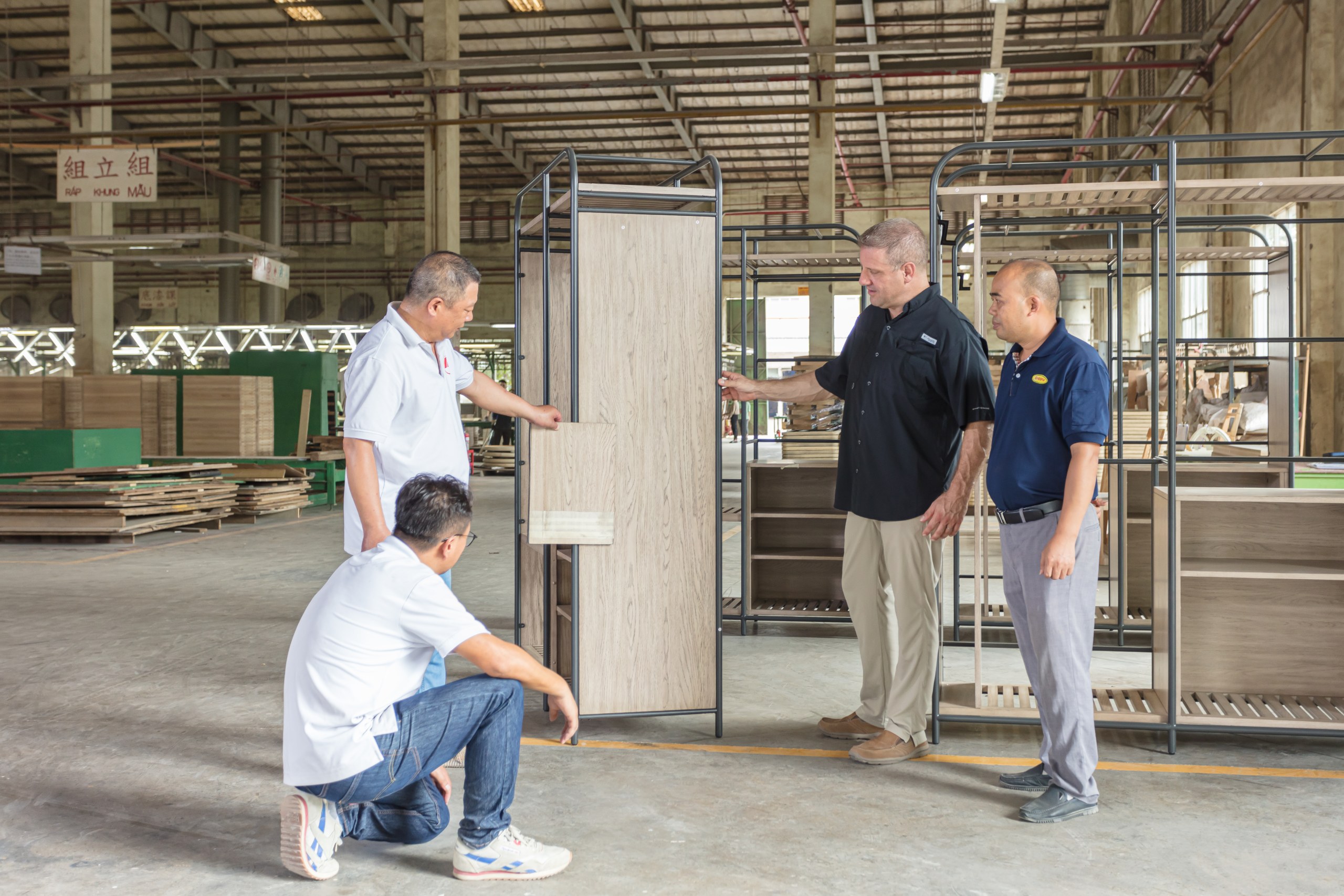
A white-wood sample is a fully constructed piece left unfinished, so you can review it before any stain or lacquer goes on. The joinery, proportions, and hardware fit are all in plain view. It’s where a designer catches a drawer front that sticks out slightly past its frame or an edge profile that needs softening.
Jaclyn Lerner, Senior Project Manager for Hospitality at Smarter Furnishings, suggests a simple routine for this review:
“Bring the approved drawing with you to the white-wood review and check the sample against it, one measurement at a time. Then use it the way a guest would. Open every drawer, reach for the pulls, and run your hand along the edges. With no finish on it yet, you can see exactly how it was built.”
Model Rooms & Final Samples
The last two approvals look at the finished piece. When available, a model room shows it alongside the seating and finishes it will share the room with, and a final sample confirms the finished piece itself before production runs for every room.
Does every hotel project need a model room?
A model room is a single guest room furnished with finished samples of each piece, so the owner and design teams can review the room as guests will use it. Only some hotel projects include a model room. Where there is one, it’s the clearest way to see the whole room working together before the full production run.
Pro tip: To get the most from the review, bring anyone who has to sign off into the room at the same time, and use the space the way a guest would: sit on the bed, open the drawers, write at the desk or workstation… Getting practical feedback in one pass keeps the changes clear before the full run begins.
Can a final sample be approved by photo or video?
A final sample can be approved in person or by photo and video. However, pieces where texture and feel matter most are usually easier to evaluate in person.
On Compass, the designer visited the factories to finalize samples, and select pieces were then air-freighted for final sign-off. That way, the designer saw the finishes in person where they were made, and the owner’s team could review the key pieces in hand without waiting on standard freight. It’s all about what works best for each project and person involved in approval.
What the Final Approval Sets in Motion
Once the final sample is signed, the nightstand goes into production at the full room count. For a piece built for the first time, our production window runs 12 to 16 weeks from a signed sales order and confirmed product and finish selections. Both sample approvals happen inside that window.
Our guide to what happens between approval and delivery follows the piece from there through production, freight, and delivery.
Smarter Hotel Spaces Start Here
With an opening on the books, each approval settles one part of the piece: line drawings and finish samples confirm fit, the white-wood sample confirms construction, and the model room and final sample confirm the finished piece before it’s made for every room.
If you have a guest room package coming up, we’re happy to walk you and the owner’s team through the process so you know what to expect at every step. Reach out to start the conversation with Smarter Furnishings.
For more insights, planning tips, and real-world project examples, explore the Smarter Furnishings blog.